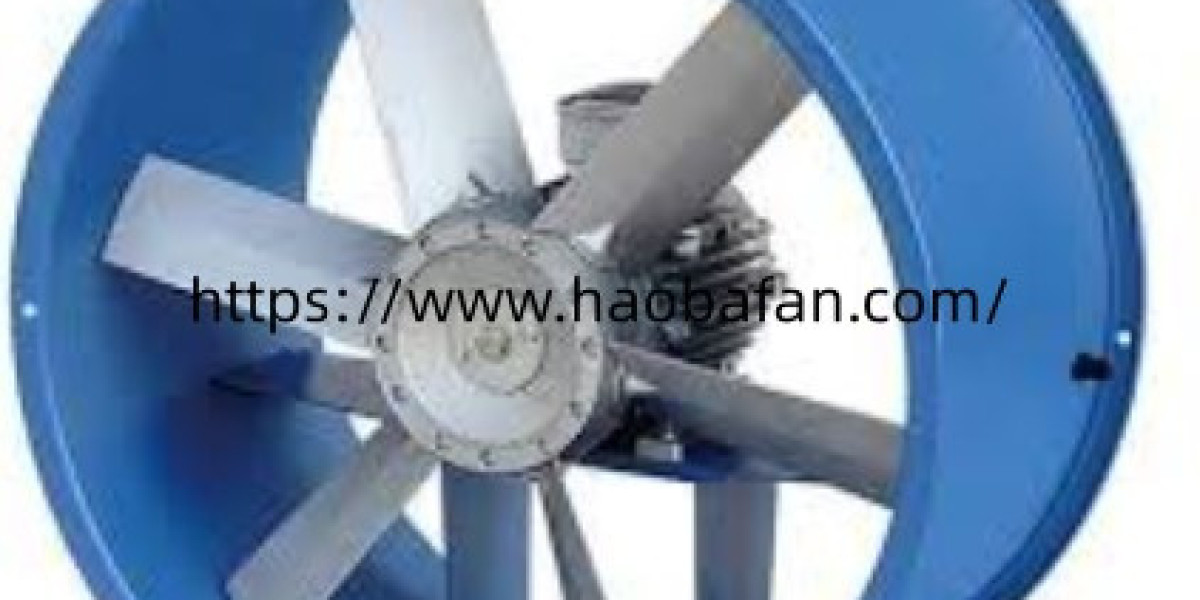

Industrial ventilation plays an important role in maintaining suitable operating conditions across manufacturing facilities, warehouses, commercial buildings, and equipment rooms. Machinery, electrical components, and production processes can generate heat that needs to be removed through reliable air circulation. An Axial Flow Fan Manufacturer serves this demand by providing ventilation equipment designed to move air along the direction of the rotating shaft. Choosing suitable equipment requires attention to airflow requirements, construction quality, operating conditions, and installation compatibility.
Axial fans use rotating blades to accelerate air through the fan in a relatively direct path. This operating principle makes them useful for general ventilation, equipment cooling, air exhaust, and circulation applications. Their performance depends on the relationship between blade geometry, motor characteristics, rotational stability, and resistance within the ventilation system. A fan that works effectively in an open installation may behave differently when connected to ductwork, protective grilles, or other airflow restrictions.
Blade design is one of the most important factors affecting airflow performance. Blade pitch, curvature, profile, and spacing influence how air enters and exits the rotating assembly. These design elements also affect turbulence, operating noise, and the distribution of airflow. Manufacturers need to maintain consistent blade geometry during production so that individual units deliver predictable performance. Accurate processing and assembly can reduce unnecessary variations and support more stable operation.
Material selection should reflect the fan's intended working environment. Depending on the product design, blades may be manufactured from metal alloys, steel, or engineered plastics. Each material offers different characteristics in terms of weight, strength, corrosion resistance, and manufacturing requirements. Fans used in humid workshops, dusty production areas, or outdoor ventilation installations may require additional attention to protective finishes and component durability. Choosing appropriate materials helps reduce premature deterioration and supports long-term use.
Motor performance is another important consideration. The motor must match the intended operating workload, electrical supply, and duty cycle. During operation, electrical and mechanical components generate heat that needs to dissipate effectively. Ambient temperature, installation space, and surrounding airflow can influence motor cooling conditions. Proper equipment selection and adherence to manufacturer recommendations help reduce unnecessary thermal stress and maintain dependable operation.
Mechanical balance contributes to smooth rotation and overall equipment reliability. An uneven rotating assembly may create vibration that transfers through the fan housing and mounting structure. This can increase operating noise, loosen fasteners, and place additional stress on bearings and other components. Appropriate balancing procedures, accurate assembly, and consistent inspection help minimize these risks. For applications involving continuous operation, manufacturing consistency is particularly valuable because small mechanical problems can become more noticeable over time.
Noise management requires consideration of both the fan and the surrounding ventilation system. Air turbulence around the blades can produce aerodynamic noise, while vibration from rotating components may be transmitted through supporting structures. Restricted air inlets, poorly designed duct transitions, and unstable mounting surfaces can make noise more noticeable. Correct installation clearance, secure fastening, and suitable airflow arrangements help improve the overall operating environment.
Maintenance planning also affects long-term performance. Dust and debris may accumulate on the blades, guards, and nearby air passages, restricting airflow or changing the balance of the rotating assembly. Regular inspections should examine visible component damage, loose fasteners, unusual sounds, vibration changes, and electrical connections. Cleaning and servicing should follow the manufacturer's instructions, with electrical power safely disconnected before maintenance begins.
For equipment manufacturers, contractors, and distributors, choosing a supplier involves more than comparing product prices. Production consistency, quality inspection, material control, technical communication, customization capabilities, and delivery reliability all influence the value of a purchasing relationship. Buyers should clearly identify the intended application, airflow requirements, installation conditions, and expected operating schedule before selecting equipment. This information helps the supplier recommend a suitable configuration and reduces the possibility of mismatched products.
Taizhou Haoba Electromechanical Co Ltd. provides ventilation products for industrial and commercial air movement applications. Customers can explore available equipment at https://www.haobafan.com/product/mixed-flow-fan/ and discuss their project requirements with the company. Working with an experienced Axial Flow Fan Manufacturer can help businesses improve equipment compatibility, maintain consistent sourcing, and establish dependable ventilation solutions for their operating environments.